🔋 How Smartphone Batteries Actually Work: An Electrochemistry Guide
Lithium ions shuttling between graphite anodes and cobalt cathodes. Learn the science of SEI layer degradation and internal resistance spikes.

🔋 The Chemistry Inside Your Smartphone Battery
Every modern smartphone is powered by a Lithium Cobalt Oxide (LiCoO2) or Lithium Polymer battery cell. Understanding the microscopic chemistry explains why batteries inevitably degrade.
🔬 The Charge Cycle Explained
During charging, lithium ions migrate from the cobalt cathode through an electrolyte solution into the graphite anode. During discharge, ions flow back, generating electrical current. Over hundreds of cycles, microscopic lithium plating and SEI (Solid Electrolyte Interphase) thickening reduce active ion mobility, causing capacity loss.
Component-Level Repairs & Diagnostics
Experiencing battery degradation, thermal overheating, display issues, or logic board failure? Visit our Marrakesh workshop at Complexe Artisanal or contact our engineers on WhatsApp for a fast, free diagnostic consultation.
DIGITAL REVIVE Engineering Team
Author & Lab TechniciansSpecialized in micro-soldering, SMD board repairs, liquid damage decontamination, and precision smartphone diagnostics at Complexe Artisanal, Marrakesh. Over 5,000+ devices restored.
Related Guides & Tips

🧼 What Happens During Professional Water-Damage Repair?
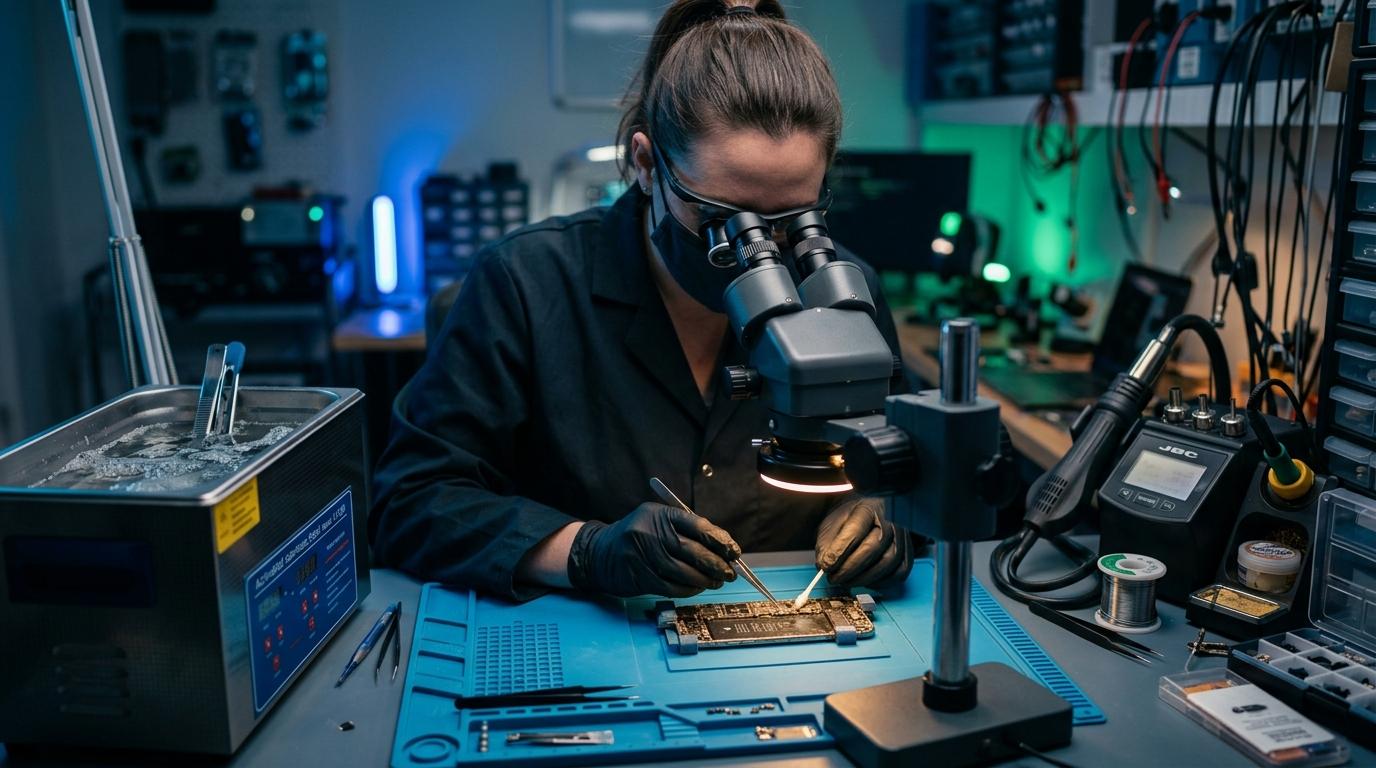
Behind the scenes in our electronics laboratory: EMI shield removal, 40kHz ultrasonic chemical baths, PCB oven baking, and micro-soldering.

🔬 Signs of Corrosion Inside a Smartphone: What Technicians Look For
Green copper carbonate patina, white crust under EMI shields, tripped Liquid Contact Indicators (LCI), and burnt solder balls.
💧 Phone Works After Water Damage but Later Dies: Why?
The delayed water damage death syndrome. Discover how mineral salts slowly oxidize solder joints under BGA chips weeks after an accidental splash.